Sunday, November 27, 2011

Setting Life Goals For singular Childless 40+ Women

An Old year gone a New Year begins setting life goals for the particular childless 40+woman, a time for much reflection. We look back not only on the past year, but the past years accomplishments or lack thereof. It is never too late to begin setting new goals. Many particular women look back and think their regrets of decisions made years earlier. Aging tends to bring on serious soul searching and contemplation of life. Entering a New Year once again brings reassessing and production new resolutions, or goals or plans for a fresh new start.

This is an awesome time for to set new goals and make changes, and/or alter in our mundane lives. We have become creatures of habit; what changes can we make that will make our lives more intriguing? Try new things. There must be a challenge that you have conspiratorially wanted to meet. What has held you back? Fear, imagining it's too late, imagining it ridiculous? Why not take the chance on a challenge this year. Challenge yourself to do something out of the ordinary, and make it work! Isn't it time you live your life with some adventure.

In setting life goals, this can all turn in 2010. You can be that risk taker, aim high and challenge yourself. Then immediately find an responsibility partner; person who will hold you to task to meeting that goal. There is an power that comes from meeting the challenge. An excitement to know that this 'mission' that you see as unimaginable will become your burning aspiration. Here are some ideas: Changing your job or career, going back to school, beginning your own business, selling some of your art, songs, crafts, writings, doing a demo Cd, writing (articles, blogs, a book), going sky diving, bungy jumping, take an art or photography class, become a volunteer at a nursing home, a mentor at a Boys and Girls Club, go to your local hospital volunteer to sit with cancer patients (adult or children), send letters and packages to soldiers in the service, become technology or public media savvy (get a Facebook/Twitter accounts) and associate with friends/family and other women who share your interests. Find a cause that you are passionate about and dedicate at least an hour a week to it.

Once you have set your goal/challenge journal your progress. If you compass your journey you will read back at year end and survey your accomplishments. This may take some reorganization of priorities. Spend more time focusing on your dream; this may mean less time watching Tv. Discipline yourself to on task and if you find you are veering off alter your methods and continue to press transmit towards setting your life goals.

One year ago I searched the web for information geared towards particular childless 40+ women and there was not a strong proximity representing us. I set out to speak to other particular childless women and started The Big Girl Talk weblog. My mission now is through The Bgt sisterhood/weblog to acquire other women who meet the prototype and become a reserved supply and networking community. In this sorority you will find your safe haven and platform where you the Sc40+ woman's voice will heard.

In setting life goals what challenges would you want to meet this advent year? And how would they improve your life?

Saturday, November 26, 2011

Brides in Bikinis - The Bahamas

If you are seeing for the exquisite destination for your honeymoon, the Bahamas will not disappoint. With powdery white sand beaches and crystal clear turquoise waters, you and your new spouse can celebrate your love in paradise. There are only a few things you need to do before you can enjoy the Bahamas. First, if you are a new wife, you will need to get a passport name turn and make sure your new husband can locate his passport and renew it if needed. Secondly, you will need to whether make plane or cruise arrangement. Next, grab your bikini, have an remarkable wedding, and get ready to soak up the sun.

There is a huge range of hotels and resorts that offer super affordable hotel packages available just for honeymooners. If you go online and do a tiny research, there are tons of packages that comprise beautiful rooms, breakfasts in bed, candlelight dinners, scuba excursions, and free gifts available at many resorts and hotels. Resorts on many of the islands offer these packages that are exclusive to newlyweds, giving you the chance to have an remarkable honeymoon for a much more affordable price.

During your honeymoon, you and your new partner have so many ways you can spend your time as a newly married couple. The Bahamas is a natural splendor, and there is as much to peruse on shore as their is in the ocean. Share a hammock under some shady palm trees along the beach, or watch the sun go down into the water with a chilly tropical drink in your hand. peruse some of the most beautiful coral reefs in the world, and swim with some dolphins and sea lions. Take a canoe and see the parts of the Bahamas off the beaten path, or go horseback riding along the beach.

The Bahamas is celebrated for its duty-free shopping and remarkable food. Eat at a chic epicurean seafood bistro one night and hit a local hotspot the next. Buy handcrafted clothing, accessories, jewelry, and much more from the shops and vendors that populate the streets of the Bahamas. At night, the real fun begins. whether you want to relax to the sounds of local musicians or dance all night at a flashy nightclub to the sound of a Dj, the Bahamas has something separate for every night of your honeymoon. Visit the world celebrated Crystal Palace Resort or the Atlantis Resort, settled on Paradise Island.

Enjoy your newlywed status relaxing on the pure white sands of the Bahamas. Order a drink in a pineapple and sit in the shallow sandbars. Spend a day exploring the celebrated streets of the Bahamas and hit a local bar for a night of dancing with your new spouse. Sit together and watch the radiant sun sink below the horizon in a display of pink, red, and orange. whether you want to have a honeymoon that is free-style, or packed to the rim with separate adventures, the Bahamas promises to make anyone you choose surreal.

Friday, November 25, 2011

The Abc's of Financial Budgeting

When one speaks of budgeting, it is normally connected with the word management. In that same vein, the word financial is synonymous with money. Therefore by "financial budgeting" what we indeed mean is: money management. And Ladies and gentlemen, it is an art form.

From the largest corporations to the forex traders to itsybitsy Johnny Joseph who wants to buy his own I-Phone, permissible financial budgeting is vital. For the most part it is all about planning and forecasting. No one can predict the time to come but forecasting helps to create a few scenarios of what lies ahead while planning makes the most of it. What I mean by that is that if you anticipate loss in one area, you can compensate by earning more or cutting costs to meet the challenge.

Of course at the corporate levels, there are obviously a handful of professionals whose job it is to do the financial budgeting. It does not mean that an private cannot do an perfect job for him or herself on a smaller scale with a itsybitsy bit of guidance and studying Before anything else you must have a deal with on two things: the plus and the minus. That is what is advent into your accounts and what is going out. That is the first part of financial budgeting.

You can do this one of two ways: You can whether start tracking your expenses and your income over the period of a month, or you can make an estimate based on your experience. Of course, the old is a more accurate way to collate your situation, but if time is of the essence, the latter is Ok as long as you can be accurate. The goal here is to end up in the "green" so to speak. Sadly, this is not the case for most people. The majority of habitancy in the western world spend more than they earn, living off prestige and never becoming debt free. This does not have to be you. With permissible financial budgeting and some logical steps you can turn your situation.

This is why I propose writing all things down to start off with, so that you have a optical of your situation, your expenses etc. You would be amazed at the estimate of areas where you could be recovery money and applying it to something distinct like a withdrawal fund or getting rid of those prestige card debts.

It is important to understand that financial budgeting is a work in progress. The nature of your allocation changes as the factors that make up the equilibrium sheet change. This could be due to changes in the economy, to your job and household income; it could even be the effect of lower heating bills due to climate change. You have to be wise about this and learn to forecast to the best of your ability. The most important thing any way is this: No matter what, always pay yourself a itsybitsy something as well. Put something aside for the time to come because you never know when that rainy day will come.

Thursday, November 24, 2011

Christian Women stepping back Preparations - A formula For Success

When Christian women recession for a weekend of renewal, they hope to come back refreshed and rejuvenated. Unfortunately, many problems can arise before and while the retreat, which can negatively affect the impact of the retreat. However, many of these problems can be avoided and prevented. With a minuscule forethought, the Christian women recession can be a very unavoidable experience. The following are 5 preparation tips to ensure a very rewarding Christian women retreat.

1. If you have small children, dispose for childcare well in advance. Sometimes a household funds does not take into account a large sum for an extended babysitter fee. If this is the case, reconsider bartering with someone else mother. You can swap childcare for a aid such as housecleaning. Or, maybe you can swap a few homemade casseroles in replacement for babysitting.

2. get ready some meals that your house can reheat for themselves while you are at your Christian women retreat. A few great suggestions are meatloaf, mashed potatoes, spaghetti, tuna noodle casserole, a large tossed salad, and of course, cookies in the cookie jar. Be sure to also stock the refrigerator with some fresh fruit. Prepackaged snacks are a beloved for the minuscule ones. Be sure to take a few of those snacks and some fruit, and pack them into your own suitcase, too.

3. When packing, bring along a small whole of varied over-the-counter medicines. Necessary medicines include pain reliever, cough medicine, cough drops, allergy medicine, antacids, and anti-diarrhea medicine. Also bring a few band aids and tissues, and don't forget the earplugs to insure your comfort.

4. Check the weather forecast for the area in which you will be staying at your singular Christian women retreat. You will want to be sure to include a jacket, a warm hat, a scarf and a pair of gloves. Sunglasses and sunscreen should also go into your bags.

5. Leave emergency phone numbers at home for your family's use. While you are at your Christian women retreat, you will want to feel at rest that preparations are in place for minor incidences that occur at home. You may want to bring a cell phone, but turn it off for portions of your weekend, checking- in only now and then.

Wednesday, November 23, 2011

Away From Home on the Holidays - 5 Ways to increase Bookings at Your Rental This Holiday Season

Marketing your vacation property? Start the holiday press now.

Each special promotion, activity, or ornamentation is like a gift for your renters - a minute holiday home adventure. Elucidate the special flair that each home reflects when it is all decked out for the holiday season. The internet is a great place for holiday advertising because it's so instant; swiftly switch in the middle of fall foliage to Christmas & Hanukkah and then transition to New Years Eve. Remember that article is king on the internet so your want to be sure to include all things that keeps your article relevant and fresh.

Here are four simple tips to make your rental stand out in the holiday season.

1) Make sure your site has a holiday look and feel - easier if you have a Cms or dynamic site. There are so many ways to showcase your home, especially on those special occasions, like Thanksgiving, Christmas, Chanukah, Kwanzaa or even New Years Eve. Picture the holiday at a new destination that celebrates another notion of holiday living, of sharing family or friends in a separate perspective. Think of an old New England hamlet or the gentile south, a Western ranch or a beach on a coast

2) Remember to post visitors about any local holiday events or specials you are running at your properties

Be sure to include local events colse to town in sightseeing or dining, or nightlife, or society fun, from town hayrides or clam bakes to holiday parades or the Christmas specials or to the ballet. The anticipated weather, throngs of citizen anticipated this holiday season, or even the privacy that they can have if they 'd rather. This could be a time of establishing a new holiday tradition.

3) If you've got it, flaunt it!

Make sure your advertising reflects any special promotions you are running, this will let it stand out from other listings. Tis the season of giving...remember that electronic gift certificates are even best than regular guests. Not only do you get the sale, but also a new guest! Use your marketing and website to remind customers of holiday specials, any discounts or deals, gift certificates or holiday pricing.

4) Don't forget to open your presents!

Utilize easy to post and free ads such as Craigslist.org and BackPage.com because citizen look there to see whats happening now, not just to plan for the future.

Craigslist is a must, but eBay Classifieds and BackPage.com are similar platforms. Craigslist has been ranked as the 10th most beloved website in the U.S., according to Alexa.com; and this makes it a ready platform to originate responses. Posting Craigslist ads repeatedly can get tiring, but the return on investment (they are free!) is unbeatable. This makes Craigslist advertising an productive but simple tool that makes increased revenues and bookings... And that's a special gift for you!

5) Make sure to let everybody know!

Your vacation rental website is the 'home-base' for your enterprise online. Make sure to keep your website updated with your specials, promotions and holiday theme! If your website isn't easy to update, and you can't swiftly change prices and promotions, it may be time for an upgrade!

Tuesday, November 22, 2011

Chennai - The South Indian Tradition

Chennai (formerly known as Madras) the capital of Tamil Nadu, lies along the coast of the Bay of Bengal, developed after 1639 when the British East India enterprise established a fort and trading post at the small fishing settlement of Chennai. Over the past three and a half centuries, the small fishing settlement has grown into a bustling metropolis which is especially known for its spaciousness which is lacking in other Indian cities. This characteristic is exemplified by the long esplanade called the Marina and which is lined by impressive structure which remind the casual visitor of the long and inseparable association the city has had with the British. Even elsewhere in the city, one cannot fail to consideration the dominant British influences in the form of old cathedrals, structure in the Indo-Saracenic style of architecture, wide tree lined avenues.

As a city it continues to speak the best of South Indian traditions. This is not surprising because the region was an foremost centre of Pallavan culture long before the British came here and the traces of which are to be found in the numerous old temples. Thus, the unwary visitor will find Madras more than just a gateway of South India. He shall find it a favorable base to peep into the varied aspects of customary south Indian culture and life styles which intermingle with the contemporary city unblemished with its plush hotels and restaurants - contribution a range of continental and typical south Indian cuisine, long and uncrowded stretches of beaches, contemporary shopping centres which offer customary handicrafts, textiles and much more peculiar to this part of India.

Besides the contemporary city itself, there are some absorbing towns like Mahabalipuram and Kanchipuram, each with a rich range of aged temples and an array of customary handicrafts which are very much their own.

Mahabalipuram: renowned for monolithic sculptures on the seashore. These sculptures belong to the period of Pallava Kings who ruled this part of South India many centuries ago. Chariot, Elephant and other huge sculptures out of singular stone is worth seeing.

Kanchipuram: A renowned place for temples and silk sarees. Also one of the place where the Hindu mutt called the Shankaracharya Mutt is situated. Varadaraja Perumal Temple and Kanchi Kamakshi temples are very famous. There are many colonies who involve in weaving pure silk sarees worth finding and purchasing too as it ranges from a simple Rs.2000/- to Rs. 1 Lakh also.

Sriperambudur: On the way to Kanchipuram is other place called the Sriperumbudur, came to light from a sleeping settlement after the assassination of Shri Rajiv Gandhi, India's youngest elected Prime clergyman on May 21, 1991, who in a short span of his politics, brought in a rapid turn information Technolocy, Communications Systems in India.

Dakshinchitra: Situated on the Ecr High way at about 25 Kms. From the centre of Chennai. It is worth spending atleast a day here to see the aged type of common houses of the South India as it depicts the range of houses built in those days to suit their needs. For e.g the fishermens' house in Kerala, Weavers house in Tamilnadu (Kanchipuram), Karnataka, and Andhra. One can also find the handicrafts of these states and many families unmistakably live here and show you how they work on a potters' wheel, weave silk sarees, make glass idols and the same items are sold here. Many volunteers work here to promote the work of these artisans.

Muttukadu: This place is a picnic spot where you can go for boat ride, or row your boat along the backwaters and enjoy the cool zephyr of the sea after 3.00 Pm.

Monday, November 21, 2011

Full Moon Party - Koh Phangan

The full moon party upon Koh Phangan is a very special event. There are few places in this world where you can live out your desert island dreams of palm trees and white sand beaches and still have a blinding night out at a rocking party every month, Koh Phangan is one of them. The town of Had Rin is a vibrant mix of friendly Southern Thai hospitality and the island's unique party culture, creating a place and vibe that could only be found at the origin of this world famous party.

The Full Moon Party is held at Haad Rin Nok, so the many restaurants, pubs and bars in Haad Rin are decorated to attract tourists.At the party, top-name DJs provide many genre of music, like Hip Hop, Dance, R&B, Reggae and lots more. In addition, any number of other performers may join the Party throughout the evening; fire blowers and dancers, face painters and impromptu firework displays among them.

In high season, there are over ten thousand people joining this party, but there are rooms to accommodate them scattered all over Koh Phangan, if you want to stay in Haad Rin you should book a room at least one week before the party. It is possible to stay on Koh Samui and get the ferry over for the party and back again early the next morning.

Police are cracking down on the drug scene at full moon parties, undercover police attend the party to try to catch people dealing or taking drugs. Large fines are the consequence faced by anyone caught. This is a significant change from the early days of the Full Moon Party when drug taking was actively encouraged upon Koh Phangan.

With the global notoriety that the Full moon party has gained as being one of the biggest and best beach bashes in the world, Koh Phangan gets more than its fair share of hedonists gracing its shores. Few know that the first Full Moon Party actually started as a going away bash for a friend of the owner of Paradise Bungalows on Haad Rin beach, which just happened to be at full moon.Each year the scene on Koh Phangan grows with the ever-increasing number of party faithful that return, bringing their friends and spreading the vibe.

Saturday, November 19, 2011

koh chang White Sand beach

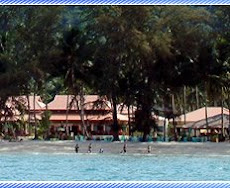
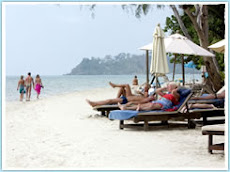
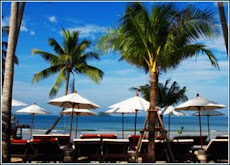
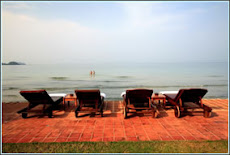
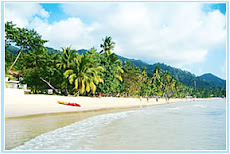
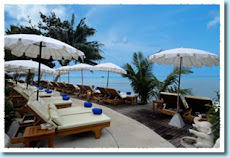
The Koh Chang largest island around Marine Park archipelago. Best visited outside of the monsoon season -- which runs from about June to September -- the sea is warm and clear, the beaches for the most part white and sandy Most of the beaches are on the western coast, and each has built up with a distinctive atmosphere based on shopping, activities, partying or chilling out. Accommodation offers a style to suit every type of traveller, from independent low budget backpackers to those wanting a touch of luxury.

West coast areas white Sand beach, Kai Bae/Khlong Prao and Lonely/Bailan. White Sands is more modern than the others, reminiscent of koh chang, or indeed its aspired cousin strip is gorgeous on the eye with its quaint village appearance, plenty of quirky shops and bars -- certainly more of a vibe tropical island

Saturday, February 7, 2009

Koh Cnang History

Battle of Koh Chang. (Thai : Yutthanavy Koh Chang.)


When King Rama V was in power on the throne played an important role during negotiations with France, Thai government inevitably made a treaty with France granting the area of current Trat Province to the western country in order that France would withdraw its force from Chanthaburi Province. Later, on March 23, 1906, the King had to grant areas, namely Pratabong, Siem Reap and Sri Sophon to France in exchange with Trat, islands and towns on the right bank of Mekong River. Hailed as a triumph for Thailand, the people of Trat erected the Rama V Monument which today can be seen at the City Hall and to this very day they celebrate 23 March as their ‘Independence Day’ and the ‘Trat Recalling Day’ is held every year to commemorate these events and the King who freed Trat from foreign rule.

While nationalistic demonstrations and anti-French rallies were held in Bangkok, border skirmishes erupted along the Mekong frontier. The superior Royal Thai Air Force conducted daytime bombing runs over Vientiane, Sisophon, and Battambang with impunity. The French retaliated with their own planes, but the damage caused was less than equal. The activities of the Thai air force, particularly in the field of dive-bombing,was such that Admiral Jean Decoux, the governor of French Indochina, grudgingly remarked that the Thai planes seemed to have been flown by men with plenty of war experience.


In early January 1941, the Thai Burapha and Isan Armies launched their offensive on Laos and Cambodia. French resistance was instantaneous, but many units were simply swept along by the better-equipped Thai forces. The Thais swiftly took Laos, but Cambodia was more difficult to take.

At dawn on January 16, 1941 the French launched a large counterattack on the Thai-held villages of Yang Dang Khum and Phum Preav, initiating the fiercest battle of the war. Because of over-complicated orders and nonexistent intelligence, the French counterattacks were stopped and fighting ended with a French withdrawal from the area. The Thais were unable to pursue the retreating French, as their forward tanks were kept in check by the gunnery of French Foreign Legion artillerists.

As the situation on land was exacerbating for the French, Admiral Decoux ordered the available French naval forces into action in the Gulf of Thailand. In the early morning of January 17, the French navy caught a Thai naval detachment at anchor off the island of Koh Chang. The subsequent Battle of Koh Chang proved a victory for the French and resulted in the sinking of two Thai torpedo boats and a coastal defence ship.

January 17, 1941 Royal Thai Navy engaged the French in a major naval battle in the waters to the South East of Koh Chang, during the French-Thai War and resulted in a decisive victory by the French over the Thai Navy. Despite the fall of France in 1940 the Vichy government still held sway over France's colonial territories abroad. One of these territories was French Indochina, what we know today as Vietnam, Cambodia and Laos. With the defeat of mainland France, obvious doubt was thrown over her ability to defend the far-flung outposts of the empire. French Indochina held a particular attraction to her neighbour to the west, Thailand.

During the war years, one of the aims of the Siamese (Thai) military government was to promote patriotism among Thai people. The sentiment of the day was to reclaim Siam’s former conquered lands in Indochina. These lands had been lost through a series of treaties and forced annexations by colonial France during the period of 1867-1906, under the reign of King Chulalongkorn. The defeat of France by the Nazi military stimulated the Thai military government to think about regaining the lost territories.


In late 1940 the Thais began a series of raids by troops and aircraft against the French possessions, aimed at annexing those parts of French Indochina which the French were unable to hold on to. These attacks tended to concentrate in the coastal regions of Cambodia, to the west of Saigon. The Thais naturally saw themselves as filling a vacuum which had been created by the deflation of French colonial power. The French, however, had other ideas and a state of war was assumed between Vichy France and Thailand (then still often referred to as Siam). Since the main thrust of the Thai assaults had been along the coast, the French considered a naval operation against the invaders, although there was grave concern over strengths of the Thai armed forces which would oppose such a mission.

The Royal Thai Navy had been modernized with the recent acquisition of vessels from Japan and Italy. The major units of the fleet included two Japanese-built armoured coast defence vessels which displaced 2,500 tons and carried 8" guns, two older British built armoured gunboats with 6" guns, twelve torpedo boats and four submarines. In addition the Royal Thai Air Force had in its inventory over 140 aircraft, including relatively modern Mitsubishi Ki-30 light bombers, which saw extensive service against the French. These aircraft in themselves were quite capable of causing severe damage to any French naval mission which may be mounted. Other less capable aircraft in the Thai inventory included P-36 Hawk fighters, 70 Chance-Vought O2U-2 Corsair biplanes, 6 Martin B-10 bombers and several Avro 504 trainers.


Despite the strengths of the Thai forces the French Governor General of Indochina and Commander-in-Chief Naval Forces, Admiral Jean Decoux, decided that the naval mission should go ahead. A small squadron, the Groupe Occasionnel, was formed on 9th December 1940 at Cam Ranh Bay, near Saigon, under the command of Capitaine de Vaisseau Régis Bérenger. The squadron consisted of the light cruiser Lamotte-Piquet, the colonial sloops Dumont d'Urville and Amiral Charner, and the older sloops Tahure and Marne. There was no air cover to speak of, apart from eight Loire 130 seaplanes based at Ream which provided reconnaissance. Additional scouting was provided by three coastal survey craft, and intelligence gleaned from the local fishermen.


Bérenger's squadron began training manoeuvres in Cam Ranh Bay shortly after coming together. Early in the new year, on January 13, 1941, Admiral Decoux formally requested Bérenger to send the squadron against the Thais to act in support of a land offensive planned for January 16. This operation was intended to throw back Thai forces which had been advancing along the coast. Because of the disparate speeds of the French ships Bérenger sent the slower sloops on ahead, whilst he remained in Saigon to complete the final elements of the plan. Several options were currently being prepared, the Admiralty in Paris having recently given its formal blessing to the use of naval forces in support of the army. The final planning meeting of the 13th saw an immediate delay in the execution of the operation for 24 hours. With the plans finalised, Bérenger sailed in Lamotte-Picquet, the delay in the start of the operation allowing him to refuel at Cap St. Jacques before the rendezvous with the slower ships at 16:00 on the 15th, 20 miles North of Poulo Condore.


The orders from Admiral Decoux were clear and simple, "Attack the Siamese coastal city from Rayong to the Cambodian frontier to force Siamese government to retreat the arms force form Cambodian frontier". On the evening of the 15th, following a final conference on board the flagship, the squadron weighed anchor at 21 15 and closed the Thai coast at 14 knots, the best speed of the sloops. The French ships remained undetected as they entered the Gulf of Siam, but their quarry was not so lucky. The Loire 130s from Ream had completed a sweep of the coast from Trat to Satahib (Sattahip). They had located one coast defence ship and two torpedo boats at Koh Chang, and one gunboat, four torpedo boats and two submarines at Satahib. Their report was sent to Marine Headquarters in Saigon, who retransmitted the report to the Lamotte-Picquet. Bérenger considered his options in the light of this intelligence and opted for a dawn attack on Koh Chang. He discounted an attack on Sattahib because it was not possible for the sloops to reach the port until later in the day, by which time the Thai force was likely to have been alerted to the French presence and the element of surprise would be lost. In addition there was doubt as to the contribution which the harbour defences at Satahib could make. Finally the force at Koh Chang, although formidable, was the weaker of the two and was thought to offer the best chance for victory.

Bérenger's plan of attack was as follows. The squadron would approach at dawn from the South West. Because the anchorage at Koh Chang was surrounded by islands and islets, many of which were over 200 metres high, the squadron would break up and use the cover of the islands to concentrate fire on portions of the Thai squadron whilst covering all the avenues of escape. The easternmost channel was regarded as the most likely route by which a breakout would be made - this was the most suitable route and was also the area in which the recce report had placed the largest Thai ships. The Lamotte-Picquet would head to the eastern side of the anchorage to block this route whilst the colonial sloops blocked the centre and pounded the Thai ships there. The smaller French ships would concentrate to the West.


The French squadron closed on the anchorage at 05:30 on January 17. At 05:45 they split into the three groups as planned, the Lamotte-Picquet heading for the Eastern part of the anchorage, Dumont d'Urville and Amiral Charner continuing to the central position and the Tahure and Marne heading for the Western side. Conditions were perfect — the weather was fine, the seas calm and almost flat. Sunrise was due at 06:30, and the scene was lit only by the first rays of light on the horizon and by the dim moonlight. A final aerial reconnaissance of the target area had been arranged using one of the Ream-based Loire 130s (Lamotte-Picquet carried two such aircraft, but these could not be launched due to catapult problems). At 06:05 the Loire 130 overflew the anchorage and reported two torpedo ships. This came as a nasty surprise to the French — previous reports led them to believe that only one of the torpedo boat was present, but during the night the HTMS Chonburi had arrived to relieve the HTMS Chantaburi, which was to return to Satahib later that day for repairing. Once their presence had been passed to the Lamotte-Picquet the aircraft attempted an attack of its own using bombs, but was forced off by a heavy barrage of fire. The effect of this mission was double edged — the French were now aware that they faced both the Thai units, but the element of surprise had been wasted and there was still thirty minutes to go until sunrise. Caught napping by the oncoming French the Thais desperately began to raise steam and make preparations for slipping their anchors. but the torpedo boats were sunk by gunfire from the Lamotte-Picquet.

At 06:38 the lookouts on the Lamotte-Picquet spotted the coastal defence ship, the HTMS Thonburi, at a range of 10,000 metres heading to the northwest. A running battle ensued with the fire of both ships frequently blocked by the towering islets. The fire from the Thai ship was heavy, but inaccurate. By 07:15 fires could be seen on the HTMS Thonburi, which then found herself engaged not only by the cruiser but also by the sloops. In the beginning of the engagement, a lucky shot from the Lamotte-Picquet killed the captain of the HTMS Thonburi, Commander Luang Phrom Viraphan, and disrupted her operations. Believing they had a better chance of hurting the smaller French ships the Thais shifted their fire onto the Amiral Charner, which soon found 8" salvoes falling around her. The HTMS Thonburi shifted fire back to Lamotte-Picquet after a salvo from the French cruiser put her after turret out of action. Soon she reached the safety of shallow water which the French ships could not enter for fear of grounding, but it all came too late for the hapless Thais as the HTMS Thonburi was burning fiercely and listing heavily to starboard. Her remaining turret was manned and hand and could not fire unless the manoeuvers of the ship put it in appropriate position. At 07:50 the Lamotte-Picquet fired a final salvo of torpedoes at a range of 15,000 metres but lost sight of the HTMS Thonburi behind an island from which she was not seen to emerge.


For the next hour the French ships patrolled the area, picking up survivors and ensuring their victory was total. At 08:40 Bérenger ordered the squadron to head for home, but this coincided with the start of the expected Thai air attacks. Several bombs were dropped close to the Lamotte-Picquet and one hit was scored, although the bomb failed to explode. A vigorous barrage was put up by the ship's AA guns and further attacks were not pressed home. The final raid departed at 09:40, following which the victorious French squadron returned to Saigon.

The French left behind them a scene of total devastation. The HTMS Thonburi was heavily damaged and hard aground on a sand bar in the mouth of the Chantaboun river. She was later raised and repaired by the Japanese, survived the war and was used as a training ship until she was retired. The Thai transport HTMS Chang arrived at Koh Chang shortly after the French departed and took the HTMS Thonburi in tow . The torpedo boats HTMS Chonburi and HTMS Songhkla

had both been sunk. The only survivors were rescued by the torpedo boat HTMS Rayong, the minelayer HTMS Nhong Sarhai and the fishery protection vessel Thiew Uthok. These three ships, which had been sheltering to the north of Koh Chang, wisely chose not to break cover and thus were not observed by the French. At a stroke the cream of the Royal Thai Navy (except the four submarines) had been wiped out. The French were elated, for they had inflicted a defeat as decisive in its way as the Japanese at Tsushima. Their success is all the more notable when the difficulties of navigating and fighting in such confined waters are considered, and given the courage and tenacity which the Thai sailors exhibited during the action (a fact which the French were gracious to accept). In the end though it was all for nought — five days later the Japanese government offered to arbitrate in the search for a peaceful settlement, and soon confirmed the Thai annexations. Even this state of affairs did not last for long, as Thailand was invaded later that year during the attacks on Malaya, and was forced to return her short-lived gains to France at the end of WW2.


HTMS Thonburi was later raised by Royal Thai Navy. She was repaired in Japan and was used as a Training ship until she was decommissioned. Her gun and deck are placed as a memorial in the Royal Thai Naval Academy, Samut Prakan.


During the post-action investigations it was claimed, on the evidence of sailors and the fisherman around Koh Chang, that heavy damage was seen to have been caused to Lamotte-Picquet and her fleet. The report claims that the crew of Lamotte-Picquet spent all of the following night
repairing the damage

The Royal Thai Air Force launched an air strike on the French battle group after the battle. Corpral Chamraj Moungpaseart (who ended his career as a Wing Commander) flew Corsair V 93 S and dropped one 50kg. bomb on Lamotte-Picquet but the bomb failed to explode.

The Indochina war under siege from the French on January 17, 1941 the French Navy crossed into Thai waters and a fierce battle with Thai ships ensued. Whilst the Thais won and were successful in driving away the French, the war which has since been called the ‘Koh Chang Naval Battle ( Thai : Yuttanavy Koh Chang )’ laid claim to numerous Thai lives as well as the three Thai battleships ‘Songkhla’, ‘Chonburi’ and the ‘Thonburi’. As a mark of respect for those who lost there lives fighting for their country the Thai Navy holds a merit. and organise the Recalling Day every year making ceremony each year on January 17.


Friday, January 16, 2009

Koh chang Paradise Island


The island is part of the Mu Koh Chang Marine National Park. Ko Chang also Koh Chang is the focal point of Koh Chang National Marine Park. Koh Chang is the second largest island of Thailand.
Koh Chang is the largest of the 52 islands. It is a mountainous island. Most of the island is rainforest and it features a range of hills, the highest nearly 800 metres high. The island has an area of approximately 429 square kilometers, extends over almost 30 kilometres in length and approximately 17 kilometres in width. Koh Chang was previously an unsettled island but it is now important as a harbour for ships to escape from the monsoon, and dietary or fresh water resources, especially at Ao Salak Phet or Ao Salat which is well known to pirates, Hai Lam Chinese and Vietnamese.


This is quite remarkable given its close proximity to Bangkok – only 330 kilometres direct, Also the proximity by bus to Bangkok to Trat 5 - 6 hours attracts additional visitors to the island. At the weekends, public holidays and vacations many Thais come from Bangkok and the closer vicinity for a short stay to Koh Chang, so that almost two third of all yearly visitors are Thai people. However the number of foreign visitors is increasing quicker compared to the number of Thais which regressed for the first time compared to the preceding year. The number of foreign guests rose.


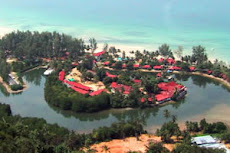
Koh chang island receives almost 685.000 visitors came annually - and the number is rising continuously. it features fine beaches, coral reefs, and plentiful marine life. It is also rich in natural resources, teeming with hills, forests, waterfalls and streams, the latter being an important source of freshwater. Dotting the island are many fruit orchards. Koh Chang is one of the few places with virgin forest, but the mad rush to cash in on tourism has had a heavy toll on its virgin forests. Land prices have skyrocketed, there are also beautiful if not high end resorts now popping up all over the island, Resort is covered with dense rain forest and with the relative savage nature, bisected by the steep wall of mountains. Most of the scenic beaches and bays are located on the western side, extending from the north to the south.
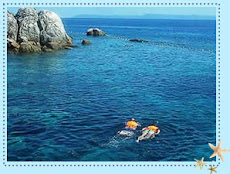
There is a road surrounding the island driving and go sightseeing in a perfect silent forest and a beautiful beach along with fresh atmosphere everywhere around Koh Chang. Koh Chang became an easy-found paradise for thousands of tourists from all over the world. Those who long for the pure, calm, peaceful, and magnificent island could feel like being in your own world here. The island and its vicinity are great places for and diving snorkelling. The best time to dive here is between November and April and the south of the island offers the best visibility. For water sports, snorkelling and scuba-diving reign supreme. Some of the most popular dive sites in the area are off the island's southern tip. Between here and Ko Kut, the underwater explorer will find much of interest, like seamounts abounding with coral, and a Thai warship sunk by the French during a territorial dispute over these waters back in 1941.Koh Chang and the surrounding islands provide some excellent opportunities for both novice and experienced divers. Visibility can reach up to 30m during the best months for diving of October to end of May. The reef at Hin Luk Bat in particular has a lot of good coral. However, even if you are snorkeling, you still want miss out. Around "Bird lsland" there are some stunning soft corals with vivid colours and so many small fish that it is like swimming in an aquarium. Largely untouched, Koh Chang is an unsophisticated island which remains unaffected by the modern world. The original inhabitants of Koh Chang (Khon Kard) still live traditionally, surviving mainly from an income of fishing, supplemented by growing fruit and rubber. There are still fishing communities on the island where rain or shine the fisherman take the boats out. At night you can see the lights on the horizon from the fishing boats catching squid. Mountainous Koh Chang has an undisturbed interior of dense tropical rain forest, home to many species including macaque monkeys, barking deer and wild pig. Trekkers can also expect to see more than 70 species of birds. Koh Chang and the islands in this chain were awarded Marine National Park status in 1982 to ensure that this pristine environment is preserved.
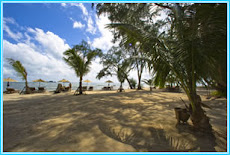
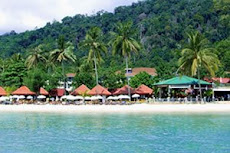
More than 70 percent of the mountainous island is still covered by rainforest, and there are many secluded beaches, complete with that vital tropical isle trinity of white sand, palm trees, and warm blue water, where you can really get away from it all and leave your troubles on the mainland.
Wealthy with greenery, wildlife, and marine creatures, its most scenic beaches are located along its western flank. Moving from north to south, the beaches are generally more secluded, less crowded and pricey, with the aforementioned Diamond Sand towards the northern tip, and Hat Khlong Phrao and Hat Kai Bae, in the middle. Further south is a lively backpacker's enclave at Lonely Beach, or Hat Tha Nam, where you can stay in a tree house.


Koh Chang as a serious tourist destination has been quite phenomenal. But it remains a lot more peaceful and less developed than islands like Samui and Phuket. It's some 5 hours from Bangkok by bus and there's no airport on the island yet so it should remain more tranquil than Samui or Phuket. Koh Chang too is one of Thailand most beautiful islands with some white sandy beaches, some half deserted. Some of the beaches are rocky in parts though so it doesn't have ideal swimming beaches like Phuket. The island is also home to a wide range of wildlife, including a good selection of birds, snakes, deer and a number of elephants. The island and its vicinity are great places for snorkeling, diving and jungle hiking.


Another object of interest on the island is the Koh Chang Remembrance that informs about the Ko Chang Sea Battle Wrecks, which were sunk directly by the beach off the south-easternmost point of Koh Chang.
During the Indochina-war, on 17th of January 1941, 7 French ships entered into Thai waters. They were successfully forced back by 3 hai warships, the Thonburi, the Songkhla and the Chonburi, however the Thonburi and the Chonburi sank with the loss of 36 Thai sailors.
The wrecks are marked with buoys, so they can be easily found by divers.On the beach, memorial tablets and a shrine inform you about the history of this brush with the enemy - unfortunately only in Thai.So you either have to go there by chartered boat from Salak Phet Bay or, if coming by motorbike or car, turn left at the intersection of the main street, around 14 kilometres south of Dan-Kao-Pier always follow the signs to the "Koh Chang Remembrance". Keep on this road until the next bigger junction, there turn left, direction "Koh Chang Remembrance" and "Long Beach". After a few hundred metres the road gets step and winding and you will pass a few places at the road from where you have an incredible view into Salak Phet Bay and to the islands south of Ko Chang.


The east of the island should also be visited, it has dramatic rocky beaches rather than the white sands of its western counterparts. Here, there is little development and life continues on the island much as it has for decades, with people living from fishing and small scale farming. Fruit bushes laiden with rambattans, for which the province is famous, bloom at the roadside in season. In the far south, a fishing village, Salak Phet, is nestled in the mangrove with boats lined up waiting to go out to sea and others awaiting repair. Everywhere there is the rhythmic sound of hammering, as essential work is carried out on the boats. Aboard small crafts, women deftly repair the nets, whilst the men store the fish traps on the jettys for use the next day.
A short distance away as the crow flies is Bang Bao, a photogenic fishing village built on stilts and extending out over the water. This can be reached from the western side of the island with a roller coaster of a drive with dramatic views down the shear drop at the side of the road to the beach below.
An island tour could also include a stop at one of the island's waterfalls, with a chance to have a swim and cool down.


The east of the island should also be visited, it has dramatic rocky beaches rather than the white sands of its western counterparts. Here, there is little development and life continues on the island much as it has for decades, with people living from fishing and small scale farming. Fruit bushes laiden with rambattans, for which the province is famous, bloom at the roadside in season. In the far south, a fishing village, Salak Phet, is nestled in the mangrove with boats lined up waiting to go out to sea and others awaiting repair. Everywhere there is the rhythmic sound of hammering, as essential work is carried out on the boats. Aboard small crafts, women deftly repair the nets, whilst the men store the fish traps on the jettys for use the next day.
A short distance away as the crow flies is Bang Bao, a photogenic fishing village built on stilts and extending out over the water. This can be reached from the western side of the island with a roller coaster of a drive with dramatic views down the shear drop at the side of the road to the beach below.
An island tour could also include a stop at one of the island's waterfalls, with a chance to have a swim and cool down.
Koh Chang, like the rest of Thailand, has 2 seasons. The rainy season here lasts from May until October, the dry season from November until April. Dry season can be divided into 2 periods: the cold time between November and February and the hot time from March until May. Most visitors are on the island between December and March, this is also the best time for a stay, since the temperatures rarely exceed over 30° Celsius. In November and December it can become occasionally quite cool because of the wind in the evening and at night.
Koh Chang has always been a favourite get-away for Thai people. Lush and mountainous, this quiet island, full of natural treasures is a jewel just waiting to be discovered.
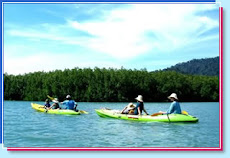
Many of the bungalow operations around have kayaks, boogie boards and mountain bikes for rent. Booking a day trip, or an overnighter, to nearby islands is another attractive option.
Whilst exploring the jungle is a possibility, the less energetic who simply want to relax on the beach won't be disappointed! The whole of the western side of the island has beautiful white sand beaches.


Because Koh Chang the near islands are so close to Bangkok a lot more Thais come to the islands as in other tourism centres of Thailand. The season on Koh Chang and the surrounding islands lasts longer than on the other islands in Thailand. During the high peak season, particularly Thai public-holidays, long weekends or during the European and Thai vacation times, shortages in accommodations may occur. It may pay to book in advance to avoid inconveniences or prepare yourself for a night at the beach, in the restaurant or in the hammock.
In almost all of our resorts were already full in October for the time around Christmas and New Year!
Especially if you want to come to Koh Chang, Koh Mak, Koh Kood, Koh Rayang or the closer islands Christmas and New Yearbetween December the 20th to January the 10th, at Chinese New Year (Trusjan) and April the 13th to 15th (Songkran or Thai New Year), you should do your reservations months in advance - these times of the year the resorts on the islands are mostly full!


*****
Koh Chang Salide Show


free counters